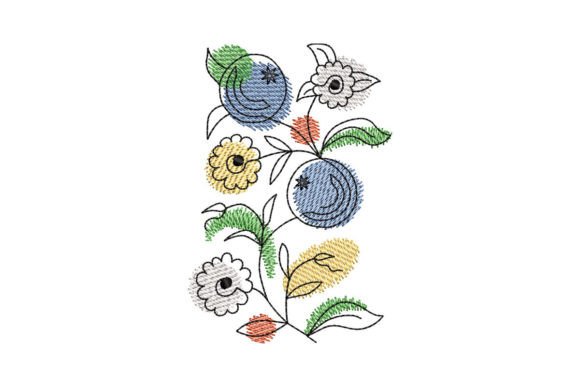
Berry Flower Border: A Designer’s Review for Real Projects
As an embroidery designer who has spent years digitizing patterns and testing them on everything from delicate silk to heavy canvas, I approach every new machine embroidery design with a critical eye. It is not enough for a pattern to look pretty on a screen; it must perform under the needle. Recently, I evaluated the Berry Flower Border, a piece categorized under Outline Flowers, to determine its viability for real-world commercial and personal use. This review breaks down how this abstract, hand-drawn aesthetic translates into tangible stitch work, offering practical insights for Etsy sellers, craft business owners, and hobbyists alike.
First Impressions: Mood and Visual Personality
The first thing that strikes you about the Berry Flower Border is its organic, free-flowing nature. Unlike rigid, geometric borders that can feel stiff when stitched, this design carries a whimsical, hand-sketched quality. The layout suggests a natural growth pattern, making it ideal for projects that require a soft, approachable touch. The abstract interpretation of berries and foliage allows for creative flexibility in thread selection. You are not bound by realistic color palettes, which is a significant advantage for designers creating custom apparel or boutique branding.
The visual personality here is understated yet elegant. It does not shout for attention but rather complements the fabric it sits on. For those of us in the industry, this is crucial. A design that overwhelms the substrate often leads to customer returns or dissatisfaction. This border strikes a balance, offering enough detail to be interesting without becoming a dense block of thread that compromises the drape of the garment.
Real-World Application: From Tote Bags to Sweatshirts
To truly test the versatility of this embroidery file, I mentally placed it into several common production scenarios. Consider a custom embroidered tote bag. Canvas is a forgiving medium, but the texture can sometimes swallow fine details. The Berry Flower Border, with its clear outlines and open spaces, holds up well here. It creates a charming accent along the hem or pocket edge, transforming a basic utility item into a desirable small shop product.
Another strong candidate is sweatshirt embroidery. When working with fleece or French terry, stitch density is a major concern. Heavy fill stitches can cause puckering and discomfort. Since this design leans towards an outline style, likely utilizing running stitch or light satin stitch elements, it sits flatter on bulky fabrics. I envision this working beautifully across the chest of a crewneck or wrapping around the cuff of a sleeve. For an Etsy seller, this means you can offer personalized gifts that feel high-end and comfortable, rather than stiff and cardboard-like.
I also considered its use in baby embroidery. The soft, rounded shapes of the berries and leaves are safe and appealing for nursery decor or infant clothing. However, one must always prioritize safety and comfort. On a baby onesie, this border would work best as a decorative accent on the collar or hem, away from areas that rub against sensitive skin. The abstract nature allows for pastel thread colors that appeal to parents looking for gender-neutral or soft aesthetic options.
Technical Considerations and Fabric Compatibility
While the design is versatile, it is not without its technical demands. As a reviewer, I must highlight where caution is needed. The "hand-drawn" look often implies varying line weights. In digitizing, this can translate to changes in stitch width. If you are stitching on thin fabric, such as rayon challis or lightweight cotton, you must use a proper stabilizer. A cut-away stabilizer might be overkill for a light border, so a high-quality tear-away or wash-away option is recommended to prevent distortion.
Stretchy fabrics present another challenge. If you are applying this Berry Flower Border to a knit t-shirt or a cap, the curvature of the surface can distort the linear flow of the border. Caps, in particular, have a curved front panel that can compress the design. I advise running a test stitch on a scrap piece of similar fabric to check for compression. You may need to adjust the pull compensation in your software if you have the editable file, or simply choose a larger hoop size to allow the design to breathe.
Dark fabrics require strategic planning. Since this is an outline-heavy design, using a single thread color might result in low visibility on black or navy materials. To maintain the design's integrity, consider using a contrasting thread color or adding a subtle underlay. Alternatively, this design could serve as a guide for an applique design, where a fabric patch is used for the berries, reducing stitch count and adding texture. Always check thread color contrast before committing to a full production run.
Enhancing Product Value and Brand Consistency
For commercial embroidery and small business owners, the choice of design directly impacts perceived value. The Berry Flower Border offers a level of sophistication that elevates a simple item. When customers see clean, intentional stitching that follows a cohesive artistic theme, their trust in the brand increases. This design supports brand consistency for shops focusing on botanical, rustic, or minimalist aesthetics.
Furthermore, the adaptability of this pattern aids in creating diverse printable mockups and digital product previews. Because the design is abstract, it looks good in various colorways. You can showcase it in earthy tones for a fall collection or brights for spring, maximizing the utility of a single digital embroidery file. This flexibility is key for keeping an online store fresh without constantly purchasing new assets.
Practical Notes for the Embroiderer
Before you load this design into your machine, keep these practical steps in mind:
- Test on Scrap Fabric: Never skip this step. Check how the stitch density interacts with your specific material.
- Check Hoop Size: Ensure the border length fits within your available hoop. If the design is longer than your hoop, you will need to plan for a multi-hoop alignment, which requires precision.
- Review Stitch Types: Identify if the design uses satin stitch for thicker lines or running stitch for finer details. This affects speed and thread consumption.
- Stabilizer Selection: Match the stabilizer to the fabric weight. Lightweight fabrics need more support to prevent puckering.
- Licensing Verification: If you plan to sell finished products, confirm the license terms provided with the download. Some designers allow commercial use for physical items but restrict the resale of the digital file itself.
In conclusion, the Berry Flower Border is a thoughtful addition to any designer’s library. It bridges the gap between artistic expression and technical feasibility. Whether you are creating holiday embroidery for gifts, designing a new line of aprons, or adding a delicate touch to a pillow cover, this design offers the reliability and aesthetic appeal needed for professional results. By understanding its strengths and respecting its technical requirements, you can leverage this asset to create standout handmade products that resonate with customers.